There are many books that can teach you how to write better. This one goes beyond - it is about becoming a writer.
Don't let the subtitle (A Book of Aid and Comfort) or the cheery Christmas-colored cover fool you. This book offers serious insights from two serious writers - who also happened to be married to each other. As such, it offers perspectives on both being a writer and on working with one.
Isaac Asimov was by far the most prolific of the two, but the book was primarily written by Janet. Isaac's prolificity must be taken with a grain of salt, as he was clearly an outlier in both the reading ("I can read upside down as easily as right side up." - pg. 96) and writing arenas. Therefore, Janet's contribution offers a common-sense viewpoint that the average reader (and writer) can appreciate.
The first third of the book is devoted to 'coping' and contains a high density of tactical writing advice - ranging from the general ("Try to have more than one writing project going" - pg. 29) to the specific: "Readers don't notice the word "said" but other words intrude upon the smooth transfer of dialogue from the page to the reader's mind." - pg. 18
Next, we have chapters on dealing with editors and critics. Some of the strategies suggested involve a fair bit of 'cathartic vocalization':
HOW TO REACT WHEN REJECTED BY AN EDITOR
First remember George Scither's rule: "We don't reject writers; we reject pieces of paper with typing on them."
Then scream a little.
... Most writers kick and scream and there isn't any reason why you shouldn't either, if it makes you feel better. However, once you are quite done with the kicking and screaming, sit down and reread the story in the light of anything [the editor] may have told you and see if you can find out what's wrong, how to correct that wrong, and how to avoid that wrong in the future. If the rejection teaches you something, you may in the long run have gained more from it than from a too-easy acceptance of a flawed story.
Don't stay mad and decide you are the victim of incompetence and stupidity. If you do, you'll learn nothing and you'll never become a writer.
The Asimov Method of Reacting to Adverse Criticism:
Be sure to follow this sequence precisely, and never leave out number 5.
If you're concerned that the prevalence of video will leave writers in the occupational dust, Isaac includes an amusing essay on the utility of the book vs. the videocassette tape. I wonder what he would have thought of YouTube!
The final third of the book gives specific advice on writing non-fiction, fiction, specialized fiction, and children's books. At the very end, there is a list of books which constitutes the Asimov's 'working library' - both reference volumes and books to be 'reread frequently' for 'exposure to good writing'.
Interspersed throughout are humorous cartoons by Sidney Harris and relevant quotations offering perspectives from a wide variety of other writers.
The majority of the book is as timeless as writing itself (just ask Sidney Harris's cartoon cavemen). However, I wonder how Isaac - who died in 1992 - would have navigated the abundance of writing channels that exist today. He viewed editors as a necessary evil - sometimes helpful but often burdensome. Nowadays, self-publishing has removed editors from their traditional role as gatekeepers of the printing presses. How to Enjoy Writing was published in 1987; the term 'weblog' (later shortened to 'blog') was coined ten years later in 1997. Writers can now 'publish' with the click of a button.
Despite these technological advances, however, the central act of writing - communicating ideas through words - remains. Somewhere, someone still has to make up their mind to commit an 'act of authorship' and write something. And with the help of this book, they may even enjoy it.
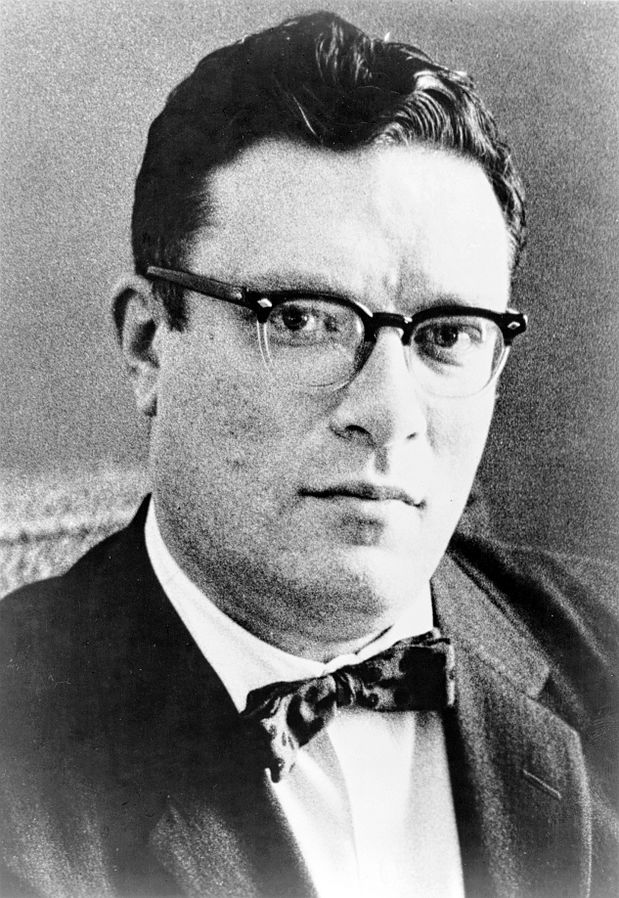
Isaac Asimov was one of the 'big three' science fiction writers of the last century, along with Arthur C. Clarke and Robert Heinlein. As one of the most prolific writers of our time, his life is worthy of study. While best known for his science fiction, primarily the Foundation and Robot series, he also wrote widely on a variety of nonfiction subjects - producing books ranging in topic from history to technology, physics to biology, and beyond. No matter the subject, his writing is generally accessible and engaging.
In addition to his books and stories, he wrote science columns for several publications and maintained a copious correspondence, writing an estimated 90,000 letters in his lifetime. All this is documented in I. Asimov - his learning and development, adventures and misadventures, the stories behind his numerous books, and memories of his many colorful associates.
Rather than following a strictly linear time format, the book is presented as a series of short chapters or essays on various topics. These are introduced chronologically, and so the reader still follows the progression of Asimov's life. However, each topic may be read independently, as it is generally rounded out by the inclusion of additional contextual information. This means the book is easy to read in small portions, and can also be used as a handy topical reference.
By contrast, Asimov's earlier autobiographies are written in the usual chronological manner, and are much longer - although at 552 pages and 235,000 words, I. Asimov is certainly no joke. Always prolific, Asimov wrote this book in 125 days.
The book concludes with an epilogue from Janet, Asimov's second wife, and a catalogue of his published books. He produced over 500 books, both fiction and nonfiction, so the list is quite substantial.
As with other Asimov books, this one is a page-turner. It is easy to get immersed in his simple, conversational writing and lose track of time - evidence that Asimov was, in fact, one of our great explainers.